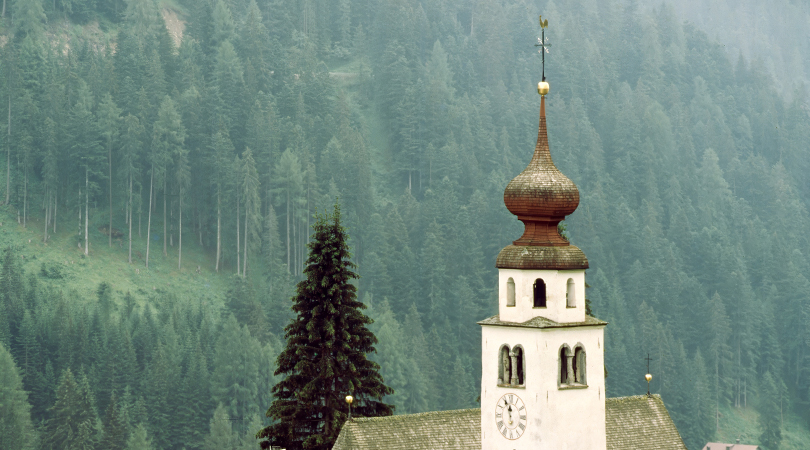
"The belfry of St. Cloud slowly emitted ten strokes from its broad, sonorous jaws. There was something melancholy in that voice of bronze pouring out its lamentations in the middle of the night; but each of those strokes, which tolled the expected hour, vibrated harmoniously in the heart of the young man."
This atmospheric quote comes to us from Alexandre Dumas' classic novel, The Three Musketeers. But what exactly is a belfry – that enigmatic structure that bathed D’Artagnan in plangent sound?
The word is one of those architectural terms that carries centuries of history in just a couple syllables. Today, it’s most commonly used to describe the part of a building, often a church tower, where bells are housed. But the story of the belfry stretches far beyond our now-familiar image.
What is a belfry?
A belfry is a structure designed to house bells, typically elevated so the sound might further resonate across a wide area. One often finds belfries in church steeples, clock towers, or standalone bell towers. The design usually includes openings, such as louvered windows or colonnades, that allow sound to radiate outward while protecting the bells within.
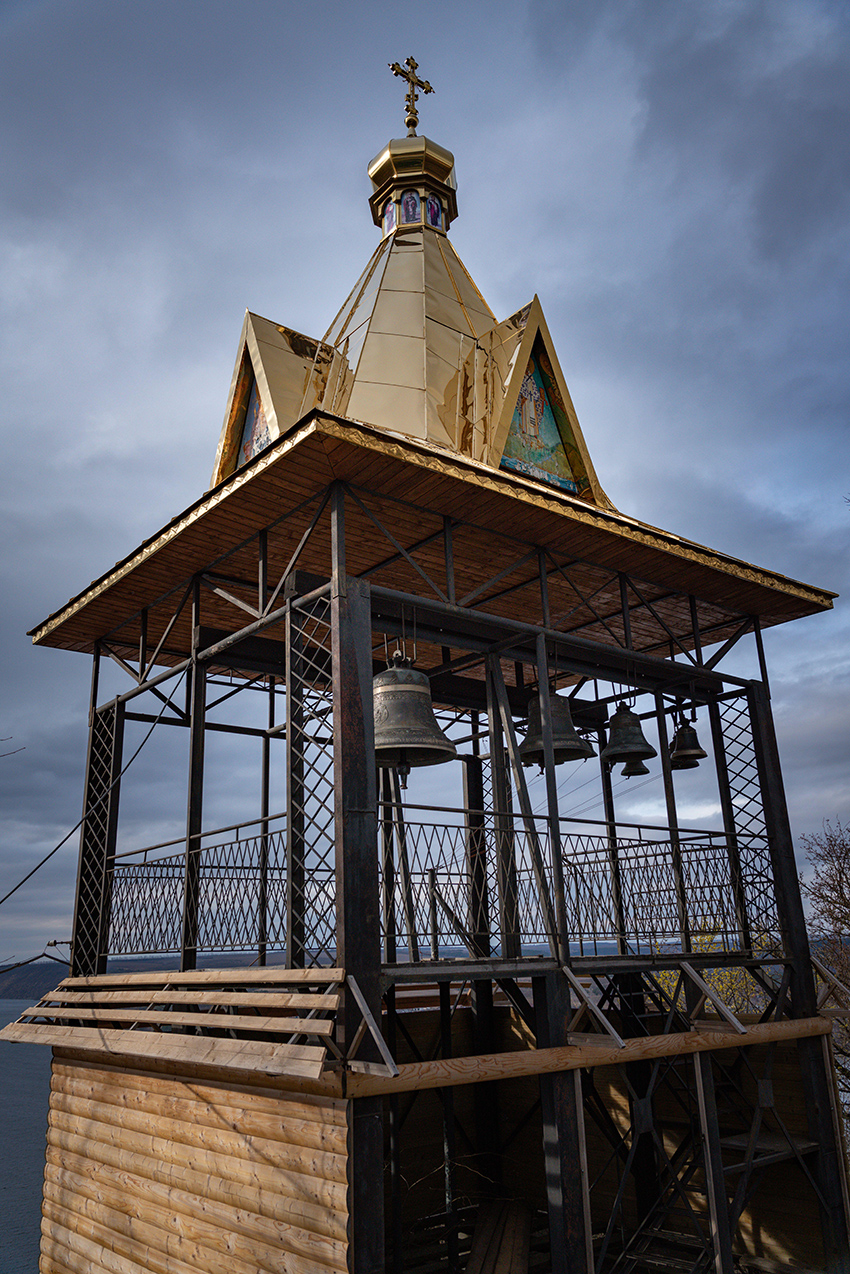
Image: Bells hang within the belfry at the Halytsky Cave Monastery near the Moldovan border in Chernivtsi Oblast, Ukraine.
Over time, the term has broadened slightly. It can describe not only a full tower, but also the specific upper section of a tower where bells are mounted. In some contexts, it may even refer to a framework or scaffold that supports bells in non-traditional settings.
The word 'belfry' comes to us from warcraft.
The word itself has an altogether more violent origin. It traces back to the Old North French term berfrei (also berfroi), and Middle High German bercfrit, combining the roots for "protect" and "peace/safety" (literally a "protecting shelter"). The word had nothing to do with bells at all. Rather, in medieval warfare, a berfrei referred to a movable wooden siege tower – a tall, fortified structure used to approach and scale castle walls during attacks.
This meaning made its way into Middle English as belfrei or berfrey, still referring to siege equipment. So how did it shift from battlefield machinery to church architecture?
The semantic drift appears to have occurred between the 13th and 15th centuries. As large vertical structures became associated more with civic and religious buildings than with warfare, the term gradually migrated in meaning. Towers that held bells, popping up with increasing prominence in towns across Europe, began to be called "belfries," possibly because of their structural resemblance to the tall siege towers of yore.
The meaning of belfry continues to evolve.
By the late Middle Ages, the association with bells had become dominant. The older military meaning faded, and "belfry" settled into its modern definition. This shift is a good example of how language evolves alongside cultural changes: as siege warfare declined and church architecture became more central to daily life, the word adapted accordingly.
The term also found its way into figurative language. The phrase "bats in the belfry" emerged as a humorous way to suggest that someone is a bit eccentric or not entirely rational – playing on the image of a dark, void tower inhabited only by fluttering, flighty creatures.
Today, in many towns and villages, the belfry remains both a functional and symbolic centerpiece – denoting time, calling people to worship, signaling emergencies, and marking important events. Both the word and the structure echo of centuries long gone, while remaining an integral part of daily life for communities around the globe.
Cover image: A belfry rises in Andraz on the slopes of the Dolomites' Col di Lana, at the foot of the Falzarego Pass, in the Veneto region of Italy.