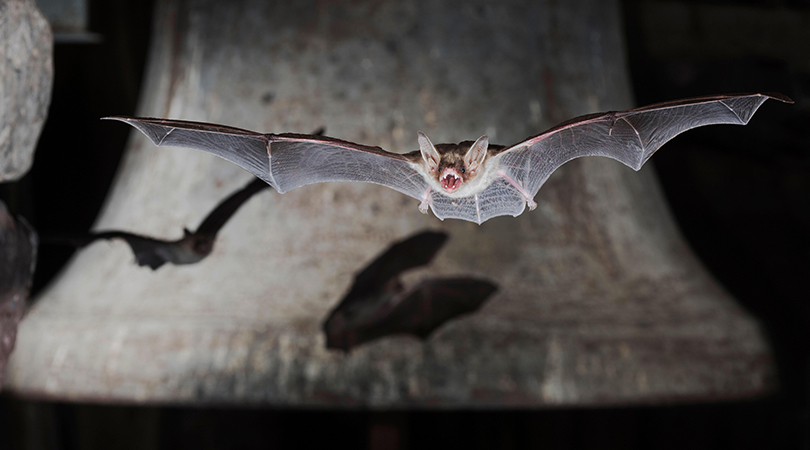
Bats and bell towers have a long, complicated relationship. The same architectural features that make towers ideal for housing bells – height, seclusion, dark recesses, and minimal disturbance – also make bell towers attractive roosting sites for bats. For bell tower managers, the presence of bats can raise concerns about architectural integrity, odor, and bell maintenance. But it’s important to start from the right premise: bats are not pests to eliminate; bats are ecologically vital species that are often protected by law.
Managing bats responsibly means finding ways to coexist, deter roosting where necessary, and, when appropriate, encourage relocation without harm. Done correctly, this approach protects both the structure and the species.
Why do bats roost in bell towers?
Many bat species naturally seek out high, enclosed spaces that mimic caves or tree hollows. Bell towers provide:
- Warm, stable temperatures
- Protection from predators
- Isolated daytime roosting conditions
- Elevated launch points for nighttime feeding
From a bat’s perspective, a church or municipal bell tower is prime real estate.
Bat protection matters.
Before taking any action, it’s crucial to understand the ecological role of bats. Organizations like Bat Conservation International emphasize that bats are among the most beneficial mammals on Earth. Consider that a single bat can eat thousands of insects in one night, including disease-carrying mosquitoes and agricultural pests. As such, bats reduce the need for chemical pesticides and some species even play roles in pollination and seed dispersal.
At the same time, many bat populations are declining due to habitat loss and diseases like White-nose Syndrome. Because of this, bats are protected in many jurisdictions, and harming them, especially during breeding or hibernation, can be not only unethical, but illegal. Do you have bats in your belfry? Here's what you should do.
Step 1: Assess the situation carefully.
Not all bat activity requires intervention. Start by determining:
- Seasonality: Are bats present year-round or only in warmer months or during migration?
- Colony: A few bats may not require action, while a large colony might necessitate prompt action.
- Location: Are bats near bells, wiring, or high-traffic areas? Is guano accumulating on or degrading critical infrastructure?
Timing is critical. Avoid any disturbance during maternity season (typically late spring through summer), when young bats cannot yet fly. Blocking access during this period can trap and kill juveniles, exactly what must be avoided.
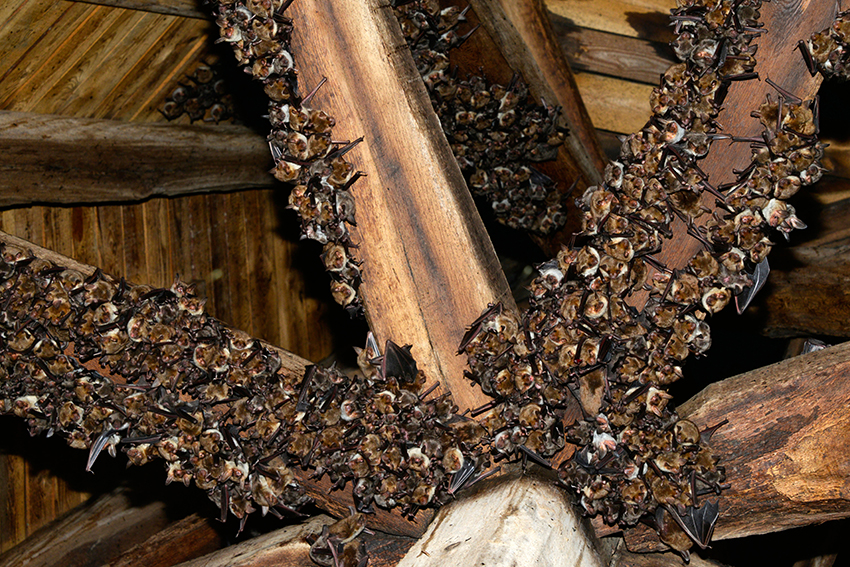
Image: A breeding colony of the greater mouse-eared bat (Myotis myotis) roosts under the roof of a church belfry in Thuringia, Germany.
Step 2: Use humane exclusion methods.
If you discover a lone bat or a small group roosting, a practical and humane step is to contact a trained bat rehabilitator or rescue specialist. Organizations like Bat World Sanctuary maintain nationwide directories of qualified wildlife rehabilitators, biologists, veterinarians, conservationists, and educators who volunteer their expertise to safely assist with bat removal and care.
If relocation is necessary, exclusion – not extermination – is the gold standard. Exclusion devices allow bats to leave the bell tower, but not re-enter. Common tools include:
- One-way mesh netting
- Tubes or funnels placed over entry points
- Flexible screening that opens outward
These should be installed only: after confirming no flightless young are present; at dusk, when bats naturally exit to feed; and over all known entry points. Keep in mind, bats can squeeze through gaps as small as ½ inch.
Once all bats have exited (typically within a few nights), entry points should be sealed permanently using materials like caulk, metal flashing, or fine mesh. Mesh screening can be placed behind louvers in most bell towers without influencing sound quality, resonance, or external aesthetics.
Step 3: Provide alternative roosting options.
Evicting bats from bell towers without offering alternative accommodations can simply push the problem elsewhere or harm local populations. A better approach is to guide bats to a more suitable habitat.
Consider installing bat houses nearby. These structures mimic the warm, tight spaces bats prefer and should be placed at least 10-15 ft. high to avoid predation. Bat houses work best in sunny locations with southern exposure. Properly installed bat houses can successfully attract displaced colonies, keeping them in the area while protecting your structure.
Step 4: Modify the environment (without harm).
Preventing re-entry often involves subtle environmental adjustments:
- Lighting: Bats prefer darkness. Adding low-level lighting in roosting areas can discourage return.
- Airflow: Increasing ventilation reduces the warm, stable conditions bats like (and has the added benefit of combating moisture accumulation).
- Sound or Vibration: In some cases, intermittent disturbance (not constant noise) can make spaces less appealing. Consider this yet another reason to ring your bells!
These changes should be gradual and non-lethal, aiming to make the tower less attractive, not hostile.
Step 5: Maintain cleanliness, safely.
Bat guano (droppings) can accumulate over time, creating odor and potential health risks. When cleaning, use protective gear (gloves, respirator) and avoid sweeping dry guano. Instead, use damp methods to reduce airborne particles. Consider hiring a professional for cleaning large accumulations. Importantly, cleaning should happen after exclusion, not during active occupancy.
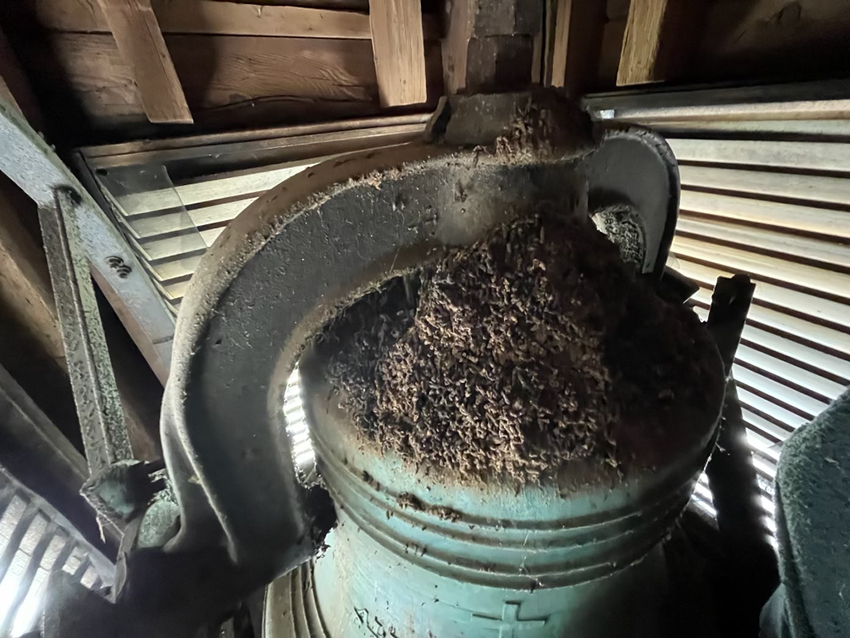
Image: Guano accumulates atop a bronze bell in a belfry in Washington, D.C. Guano causes acidic corrosion of the bell surface and protective patina, adds physical weight that supporting structures might not have been designed to accommodate, and promotes wood and metal decay.
Step 6: Work with people who know bats best.
If you’re dealing with a large colony or unsure about timing, consult wildlife professionals or local conservation agencies. Many regions have bat specialists who can identify species, advise on legal protections, and install exclusion systems properly. This is especially important if endangered species may be present. Under no circumstances should you consult or hire an exterminator.
There are legal and ethical considerations, too.
In the United States and many other countries, bats are protected under wildlife laws. Some species are listed under the Endangered Species Act, making it illegal to harm or disturb them.
Even when not legally required, ethical stewardship matters. Bell towers are often historic or community landmarks. Managing your bell tower responsibly includes protecting the wildlife that has adapted to it.
The goal isn’t to “get rid of bats” in your bell tower, but to manage shared space intelligently. With the right approach, bell tower managers can:
- Protect bell towers and adjoining structures from damage
- Maintain safe and clean conditions
- Support local ecosystems
Bats have been part of human structures for centuries. With a bit of planning and respect for their role in the environment, bats don’t have to be a problem – they can remain a quiet, beneficial presence just outside your bell tower's walls.
Cover image: Greater mouse-eared bats (Myotis myotis) fly around the bells within the belfry of a church in Thuringia, Germany.