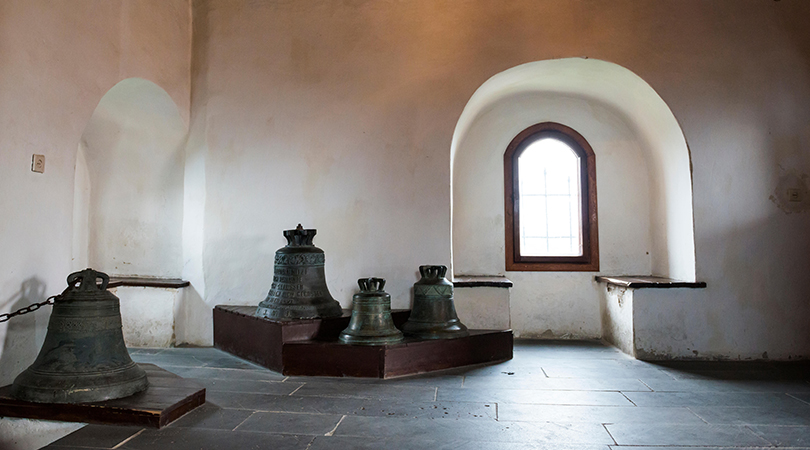
Tucked within the fortified walls of the Vladycha Tower at Lubart's Castle – one of the most iconic landmarks in Lutsk, western Ukraine – is not only a medieval arsenal, but also a small but extraordinary cultural treasure: the Museum of Bells.
Unlike traditional museums filled with paintings or artifacts behind glass, this institution tells its story through sound, craftsmanship, and centuries of human ritual. It is the only museum in Ukraine dedicated entirely to bells, offering visitors a rare opportunity to explore the historical, religious, and everyday significance of campanology.
Soviet restrictions on religion propelled early acquisitions for the bell museum.
The Museum of Bells is housed in the Vladycha (Bishop's) Tower, a 14th-century structure that once played a vital role in the administration and defense of the castle. Vladycha Tower itself is a historical artifact, with its thick stone walls providing an atmospheric and deeply immersive setting for the museum’s collection.
The museum traces its origins to the 1980s, when preservationists began rescuing bells from abandoned or closed churches across the Volyn Oblast. During the Soviet era, many religious institutions were shuttered, and their bells – once central to community life – were at risk of being lost, destroyed, or repurposed. A dedicated group of museum workers and historians stepped in to collect and safeguard these artifacts, laying the foundation for what would become a singular national collection.
Now, the collection spans centuries.
Today, the Museum of Bells houses more than 90 bells, most dating from the 17th to early 20th centuries. The collection is notable not only for its size but also for its diversity. While church bells form the heart of the exhibit, visitors will also encounter bells used in schools, railways, postal services, and maritime settings. There are cowbells, crotals, and ship's bells, each representing a different aspect of daily life in Ukraine across the ages.
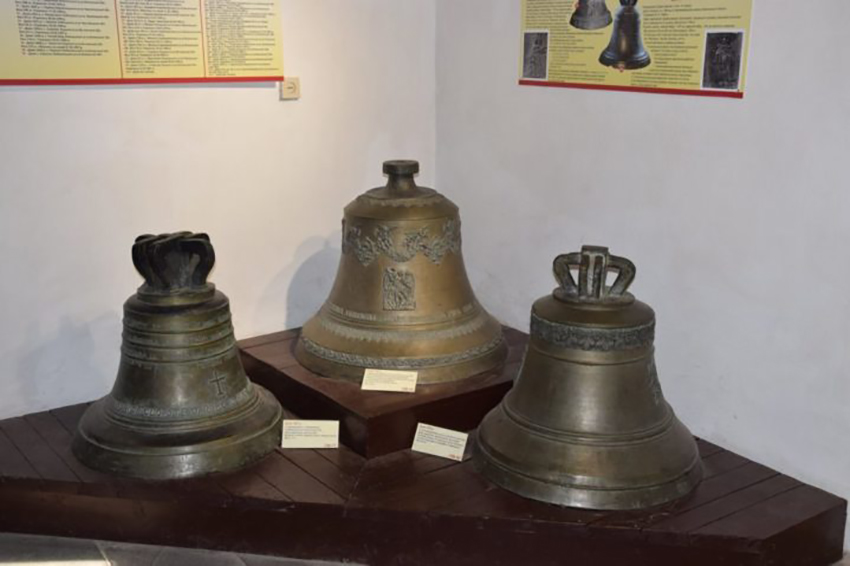
Image: Bells on display at the Museum of Bells in Lutsk, Ukraine. Courtesy: Lutsk Tourist Information Center.
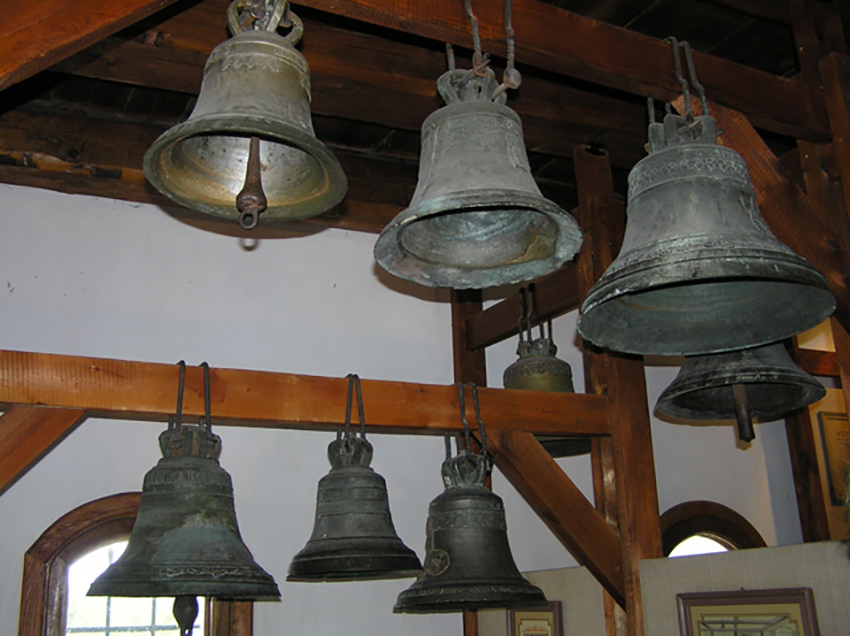
Image: Bells on display at the Museum of Bells in Lutsk, Ukraine. Courtesy: Lutsk Tourist Information Center.
Some of the bells are modest in design, bearing simple inscriptions or dates of manufacture. Others feature intricate reliefs with religious motifs, reflecting their sacred purpose. The largest bell in the collection weighs 772 lbs. (350 kg.), demonstrating the impressive scale and engineering skill involved in their creation.
One of the museum’s most prized artifacts is a bronze bell cast in 1647. This bell is particularly significant because so few bells of that age have survived in Ukraine. During periods of conflict, especially in the time of Bohdan Khmelnytsky and the Cossack uprisings and later during the Soviet era, many bells were melted down to produce cannons and other weaponry. This bell has resonated across a long arc of Ukrainian national history and identity.
How has bell founding evolved throughout the years?
Beyond their historical value, the museum's bells also illustrate the evolution of bell-making techniques in the region. Some were produced using elemental handcrafting, while others demonstrate a sophisticated mastery of metallurgy and foundry sciences.
The collection includes works from notable bell foundries, such as those of the Olovyanishnikov family, one of the most prominent merchant families and bell makers in the Russian sphere of influence. There are also bells from regional makers in Volyn, as well as from Austrian and Romanian workshops, reflecting the diverse cultural influences that have shaped this part of Eastern Europe for hundreds of years.
Researchers associated with the museum have even suggested that some of the earliest bell-making traditions in Ukrainian lands may have originated in the Volyn Oblast itself. Historical references, including entries in the Galician-Volhynian Chronicle, describe the casting of bells as early as the 13th century under Prince Volodymyr Vasylkovych. These early bells were said to produce sounds unlike anything previously heard in the region, underscoring the importance of bell-making as both an art and a technological achievement.
The Museum of Bells is an active and evolving cultural center.
While the museum preserves the past, it is also a vibrant center for contemporary cultural expression. One of its most notable events is the Blahovist Volyni, or “The Chime of Volyn.” This festival brings together skilled bell ringers from across Ukraine who demonstrate the musical possibilities of bells through intricate performances. These events highlight the fact that bells are not merely static objects; they are instruments capable of conveying emotion, marking time, and bringing communities together.
Interestingly, the museum’s collection is not fixed. Over time, some bells have been returned to their original locations, particularly to churches that have resumed operation. In one instance, more than 25 bells were repatriated, reflecting an ongoing balance between preservation and restoration of living traditions.
While the museum’s narrative arc stretches from medieval chronicles to modern industry, a symbolic endpoint of the exhibition is a more recent bell from the city of Novovolynsk, representing the continuation of bell-making traditions into the contemporary era. This connection between past and present reinforces the idea that bells remain relevant, not only as historical artifacts, but as living elements of cultural identity.
Want to visit Ukraine's Museum of Bells?
A visit to the Museum of Bells is included with admission to Lubart's Castle, making it an accessible addition to any exploration of the site. While it may not be the largest museum, its uniqueness and depth of storytelling make it one of the most memorable. Prepare to leave not only with a greater appreciation for traditional craftsmanship, but also with a deeper understanding of how something as simple as a bell can carry centuries of meaning.
The museum's operating hours vary with the seasons, but expect daily admittance between 10:00am–5:00pm during winter months and 10:00am–7:00pm in the summer.
Cover image: Bells on display at the Museum of Bells in Lutsk, Ukraine.