The United States maintains a wide network of allies around the world, built through shared values, mutual interests, and longstanding diplomatic, economic, and security partnerships. These alliances, ranging from formal treaty commitments to close strategic friendships, help promote global stability, deter conflict, and address challenges that no nation can manage alone. Allies provide trusted cooperation in areas such as defense, trade, intelligence, humanitarian aid, and technological innovation, strengthening collective resilience in an increasingly interconnected world.
Just as importantly, strong friendships between nations reinforce norms like the rule of law, respect for sovereignty, and democratic governance, reminding us that international cooperation is not only a matter of strategy, but also of trust, reliability, and shared responsibility. It is, therefore, both right and fitting that we as a nation should mark the passing of a foreign dignitary with whom we share close ties.
How should bells ring to mark the death of a foreign dignitary?
Bells toll at sunset on the day following the announcement of the death of the head of state or monarch of an allied nation, including the pontiff in Rome.
Bells may resound with 13 seconds between each strike. The total number of tolls is equal to the number of states in the Union, i.e. 50 as of 2025. Alternatively, bell ringers may elect to ring the Nine Tailors.
Should individual towers wish to resound for the later funeral or burial of the deceased, guidance put forth by the presiding authority should be followed. This may be issued by the acting head of government, foreign office, or religious institution conducting the funerary rites.
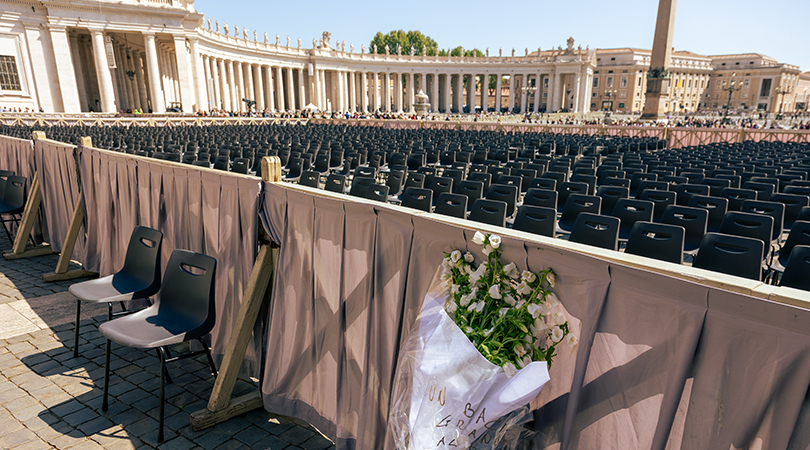
Cover image: Chairs are assembled in St. Peter's Square within the papal enclave of Vatican City on April 22, 2025, in preparation for the funeral of Pope Francis.